Choosing the right supplier begins with a practical question: how to choose a quality handbag manufacturer in China without relying on polished promises. Factory photos can look impressive, yet they rarely reveal production discipline, material consistency, or after-sales responsibility. A reliable evaluation requires more than comparing quotations.
Experienced buyers usually examine several physical details. Request recent product samples, not only digital catalogs. Check edge painting, zipper movement, lining attachment, logo placement, and stitching tension. Hold the bag under natural light. Uneven grain, loose threads, or a strong chemical odor may indicate weak material control. Ask whether the factory uses genuine leather, microfiber, canvas, or coated fabric, and request supporting specifications.
A professional manufacturer should explain minimum order quantities, sampling fees, lead times, inspection procedures, and packaging standards clearly. Factory certifications can support credibility, but they should be verified rather than accepted blindly. A video call can reveal the cutting area, sewing lines, warehouse organization, and quality-control process. Small details matter. Ask how defects are recorded and corrected.
Communication is another practical test. Can the supplier understand a technical sketch, measurement chart, or hardware reference? Can the team discuss revisions without avoiding difficult questions? No checklist is perfect. Even careful buyers may overlook a hidden cost or underestimate sampling time. That is why staged orders, written specifications, and independent inspections provide valuable protection. A trustworthy partnership develops through evidence, consistent workmanship, and honest conversations—not attractive claims alone.
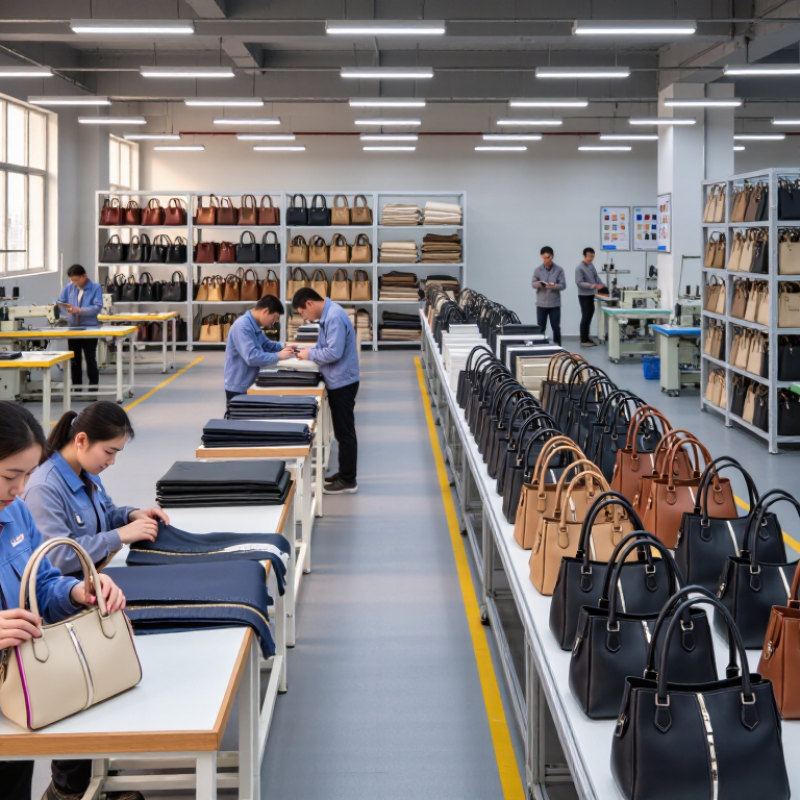
How to Choose a Quality Handbag Manufacturer in China?
Before contacting a Chinese handbag manufacturer, define the product in measurable terms. Specify dimensions, leather or textile type, lining, hardware finish, stitching density, logo placement, packaging, and target quantity. A vague brief creates vague quotations. It also encourages substitutions that may appear only during sampling.
Materials need careful planning. Textile Exchange’s Materials Market Report 2024 states that global fiber production reached 124 million tonnes in 2023. It may reach 160 million tonnes by 2030. This growth increases pressure on material traceability and quality control. Ask suppliers for material composition, test reports, colorfastness results, and documentation for recycled content. For leather, request thickness tolerance and surface inspection standards. “Premium leather” is not a technical specification.
Production details matter just as much. Define acceptable defects, measurement tolerances, sample approval stages, lead-time targets, and inspection points. The McKinsey State of Fashion 2024 report highlights supply-chain resilience and traceability as major industry priorities. Request a factory audit, production photos, and a written quality plan. My own first specification was too broad. I focused on appearance, but ignored edge paint durability and zipper testing. That mistake was expensive. Leave room for revision, because the first sample often exposes requirements you forgot to define.
| Requirement Dimension | Recommended Manufacturing Requirement | Practical Specification or Benchmark | How to Verify the Manufacturer | Priority |
|---|---|---|---|---|
| Product Category | Define the exact handbag type before requesting quotations. | Tote, shoulder bag, crossbody bag, backpack, clutch, bucket bag, or travel bag; include intended use and target customer. | Ask for relevant product samples and confirm that the factory has suitable equipment and experienced operators. | Critical |
| Dimensions and Construction | Provide a technical specification sheet or approved sample. | Specify length, height, width, handle drop, pocket locations, seam allowance, reinforcement points, and finished weight. | Review a pre-production sample with measured dimensions and written tolerances. | Critical |
| Outer Material | Select material according to appearance, durability, cost, and care requirements. | Common options include genuine leather, polyurethane leather, PVC, canvas, nylon, cotton, and recycled polyester. | Request material cards, composition details, color standards, thickness measurements, and test reports where applicable. | Critical |
| Material Performance | Set measurable performance expectations for the selected material. | Evaluate abrasion resistance, colorfastness, flexing resistance, coating adhesion, tear strength, and hydrolysis resistance for coated materials. | Use an independent laboratory or an agreed testing method; compare results with the approved material standard. | Critical |
| Lining and Interfacing | Define lining fabric, hand feel, structure, and bonding method. | Specify lining fiber content, fabric weight, color, foam or board thickness, and whether the bag requires a soft or structured silhouette. | Inspect the sample for bubbling, delamination, wrinkles, odor, and insufficient structural support. | High |
| Hardware and Trims | Specify metal type, finish, color, dimensions, and functional requirements. | Include zippers, sliders, rings, buckles, snaps, rivets, feet, chains, and decorative components; define finish such as matte, polished, or antique. | Check plating consistency, sharp edges, corrosion resistance, pull strength, opening and closing performance, and attachment security. | Critical |
| Stitching and Workmanship | Establish workmanship standards before bulk production. | Define stitch density, seam appearance, thread color, edge paint finish, corner shape, alignment, and acceptable loose threads. | Inspect samples under consistent lighting and use a documented defect classification system for major and minor defects. | Critical |
| Color Management | Use physical color standards rather than relying only on screen images. | Approve a material swatch or color reference; specify separate standards for outer material, lining, thread, edge paint, and hardware. | Request a lab dip or pre-production color sample and inspect color consistency across production lots. | High |
| Sampling Process | Require a documented sample approval process before placing the production order. | Typical stages include prototype, revised sample, size set or color sample, and a sealed production reference sample. | Confirm sample fees, revision limits, sample lead time, ownership of patterns, and approval responsibilities in writing. | Critical |
| Minimum Order Quantity | Match the minimum order quantity with the sales forecast and cash-flow plan. | Confirm MOQ by style, color, material, and size; lower quantities may increase unit cost or require material surcharges. | Request a written quotation showing price breaks, sample charges, tooling charges, and costs for small-volume orders. | High |
| Production Capacity | Ensure capacity is suitable for both the initial order and future repeat orders. | Evaluate monthly capacity by product type, number of production lines, peak-season workload, and ability to handle replenishment orders. | Review a factory profile, production schedule, equipment list, and recent capacity records during an audit or video inspection. | High |
| Quality Control Plan | Use quality checks throughout production rather than relying only on final inspection. | Include incoming material inspection, cutting inspection, in-process checks, hardware checks, final inspection, and carton verification. | Ask for inspection records, defect reports, corrective-action procedures, and the agreed inspection standard or sampling plan. | Critical |
| Compliance and Restricted Substances | Identify destination-market requirements before material purchasing. | Consider requirements related to restricted chemicals, azo dyes, heavy metals, phthalates, formaldehyde, leather chemistry, labeling, and packaging. | Request current material declarations and independent laboratory reports matched to the actual production materials. | Critical |
| Ethical and Environmental Practices | Define social, environmental, and traceability expectations appropriate to the target market. | Review worker safety, working hours, wage practices, waste handling, wastewater controls, energy use, and material traceability. | Use an independent social or environmental audit when required and verify the scope, date, and facility address of any report. | High |
| Lead Time | Separate development time, material procurement time, production time, and shipping time. | Lead time depends on product complexity, material availability, order quantity, approval speed, and seasonal factory loading. | Request a milestone schedule with dates for material approval, pre-production sample, production start, final inspection, and shipment. | High |
| Packaging and Labeling | Define protection, presentation, carton dimensions, and destination-market labeling. | Specify dust bags, tissue paper, hangtags, barcode labels, individual polybags where appropriate, carton quantity, and moisture protection. | Approve packaging artwork and perform a carton drop or transport simulation when the product is vulnerable to deformation. | Medium |
| Commercial Terms | Document pricing, payment, delivery terms, tooling, changes, and claims procedures. | Compare unit price, material assumptions, payment milestones, delivery term, currency, bank charges, inspection costs, and replacement policy. | Use a purchase agreement or confirmed purchase order that references the approved specifications and quality requirements. | Critical |
| Communication and Documentation | Choose a supplier able to manage technical details and provide timely production updates. | Require clear English documentation, version-controlled specifications, approval records, production photos, inspection reports, and shipment documents. | Evaluate response speed, accuracy of quotations, willingness to identify risks, and consistency between written commitments and factory practice. | High |
State dimensions, material type, lining, hardware finish, stitching density, logo position, packaging, and target quantity. A vague brief invites substitutions.
Request material composition, test reports, colorfastness results, and recycled-content documents. For leather, specify thickness tolerance and surface inspection standards. “Premium” is too vague.
Define acceptable defects, measurement tolerances, approval stages, lead times, and inspection points. Include edge paint durability and zipper testing. I once missed both.
Request three samples from different manufacturers using the same specification sheet. Compare stitching, lining strength, edge paint, hardware coating, zipper movement, and logo placement.
Observe cutting tables, sample rooms, material storage, and final inspection records. Ask whether production happens in-house or through subcontractors. Look closely.
Request business licenses, factory addresses, production categories, export markets, and recent audit records. Export volume alone proves little. A trading company may control production poorly.
Not immediately. A low price may reflect thinner materials, weaker hardware, or unstable labor planning. Compare identical specifications and testing requirements before deciding.
Request colorfastness, abrasion, and hardware corrosion tests when relevant. Also check zipper movement and edge paint resistance. Some details remain uncertain until sampling.
Request written lead times, production updates, shipment tracking, and customs coordination details. Reliable logistics helps, but it cannot replace product inspections.
Choosing a reliable supplier begins with clearly defining your handbag manufacturing requirements, including product style, materials, dimensions, target quantity, budget, and expected delivery schedule. The next step in learning how to choose a quality handbag manufacturer is to research and shortlist factories in China that have relevant experience, strong production capabilities, and a suitable product range. Review their company background, factory facilities, quality certifications, production capacity, and previous work before making a decision.
Request samples to assess craftsmanship, stitching, hardware, lining, packaging, and material consistency. Compare quotations carefully, considering minimum order quantities, customization options, payment terms, lead times, and quality standards rather than focusing only on price. Effective communication is also essential for confirming specifications and resolving issues quickly. Before production, use a clear contract, approve a final sample, arrange inspections, and confirm shipping responsibilities, documentation, and delivery terms. A careful evaluation process can reduce risks and support a stable, long-term manufacturing relationship.

 Fren Fashion