Explore our foundational tooling, mechanical engineering lines, and custom accessories configurations.
The global leather goods market is experiencing a profound paradigm shift. Enterprise brands, private label fashion houses, and industrial manufacturers are navigating a transition powered by automation, sustainable materials, and rigorous trade compliance. Traditional manufacturing methodologies, once characterized by intensive manual cutting and high scrap rates, are rapidly giving way to computer numerical control (CNC) systems, smart nested layouts, and closed-loop material cycles.
As consumer demand shifts toward ethical production and material traceability, procurement officers no longer merely evaluate manufacturers on per-unit cost. Rather, the contemporary decision matrix incorporates a supplier’s carbon accounting, environmental certifications (such as Leather Working Group (LWG) ratings), and physical automation capacities. High-quality synthetic substitutes—ranging from advanced polyurethanes (PU) to bio-based fruit waste leathers and high-color-fastness microfibers—are establishing new criteria for industrial durability and visual appeal across the footwear, apparel, and automotive interior segments.
For strategic buyers, understanding the global manufacturing and supply matrix is key to mitigating supply chain disruption. In the subsequent sections of this whitepaper, we dissect the core structural solutions, localized support mechanisms, and technical roadmaps that define top-tier manufacturers. We analyze how leading entities optimize material properties, utilize custom labels, and integrate heavy machinery lines to satisfy strict international standards.
To understand the execution of these global standards, we turn to the production models established by industry leaders. The following sections outline the verified corporate framework, operational guidelines, and manufacturing protocols of Dongguan Fren Fashion Co., Ltd.:
Dongguan Fren Fashion Co., Ltd. is a professional Handbag Manufacturer specializing in fashion bags, private label collections, and custom accessories solutions for global fashion brands, retailers, wholesalers, and sourcing companies. Located in Dongguan, China, the company focuses on the design, development, and production of high-quality handbags and fashion accessories that combine functionality, style, and market-driven trends.
With extensive experience in fashion manufacturing, Fren Fashion provides a comprehensive range of solutions covering fashion handbags, lifestyle accessories, premium bag collections, sustainable fashion products, private label development, OEM manufacturing, and ODM design services. The company works closely with customers to transform concepts into market-ready collections that align with brand positioning, target audiences, and evolving fashion demands.
Fren Fashion places strong emphasis on craftsmanship, material selection, and production consistency. Its experienced design and product development teams continuously monitor international fashion trends and consumer preferences to support customers with innovative product concepts and customized solutions. From material sourcing and sample development to mass production and quality inspection, the company maintains a structured manufacturing process designed to ensure product reliability and visual appeal.
Equipped with modern production facilities and comprehensive quality management systems, Fren Fashion is committed to delivering products that meet international quality standards and customer expectations. The company offers flexible manufacturing capabilities that support both emerging fashion brands and established global retailers seeking scalable production solutions.
Serving customers across North America, Europe, Asia, the Middle East, South America, and other international markets, Dongguan Fren Fashion Co., Ltd. is dedicated to building long-term partnerships through dependable manufacturing, efficient project management, and responsive customer support. The company continues to help fashion businesses develop competitive handbag collections and custom accessories solutions for diverse global markets.
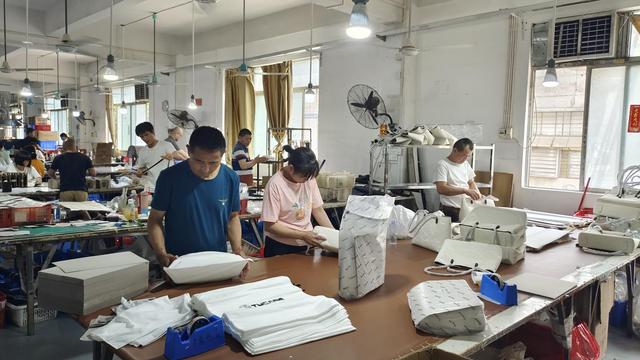
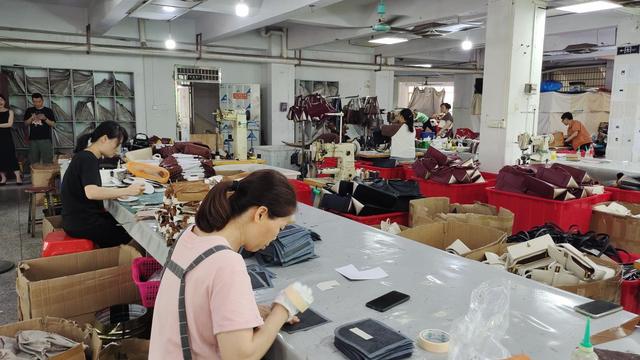
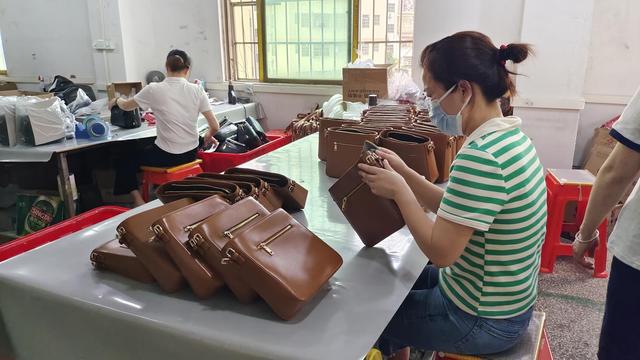
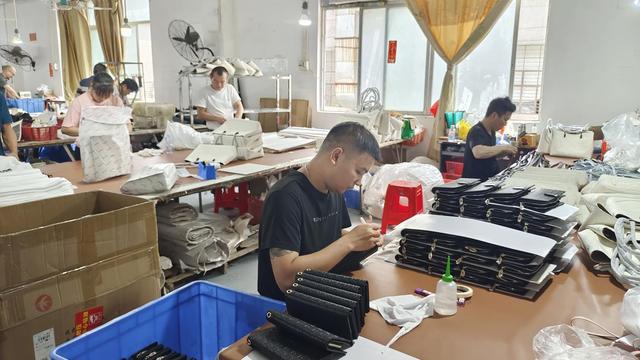
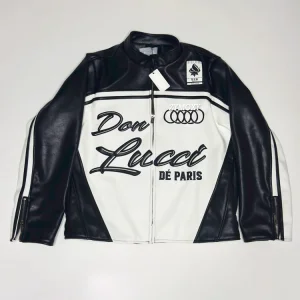
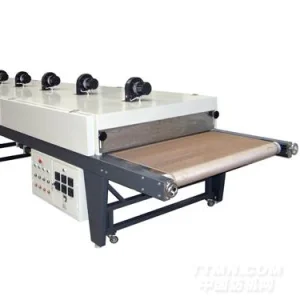
Authentic visual evidence of our active workshop machinery, raw materials, sewing setups, and finished goods inspection.
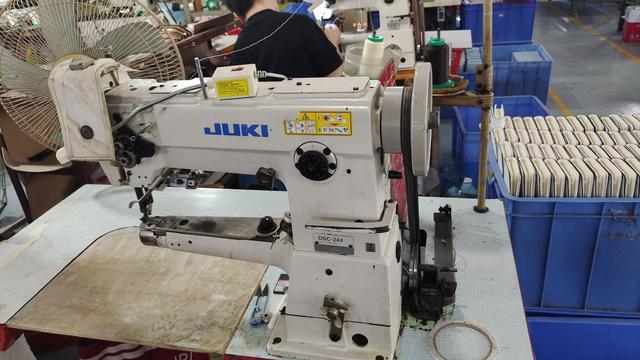
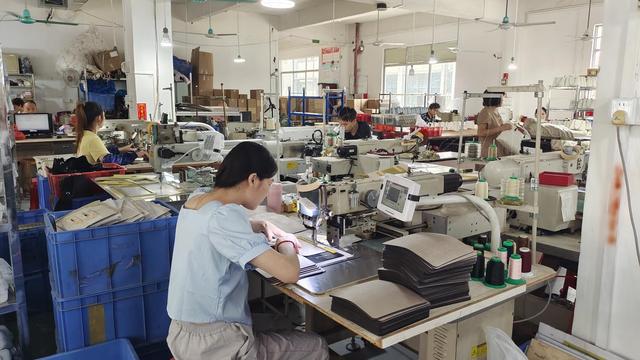
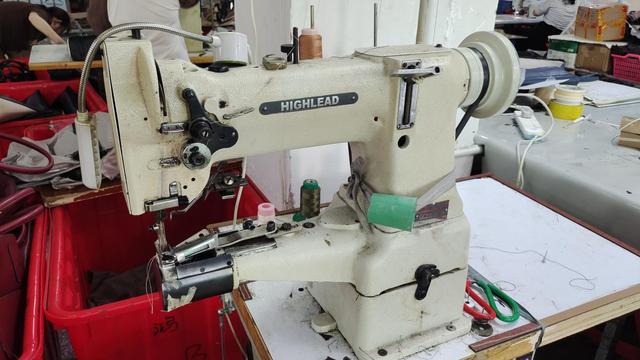
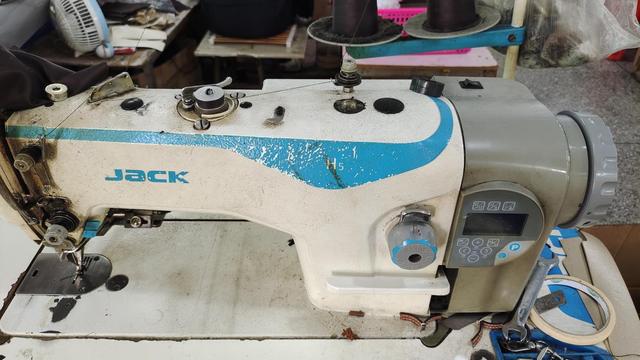
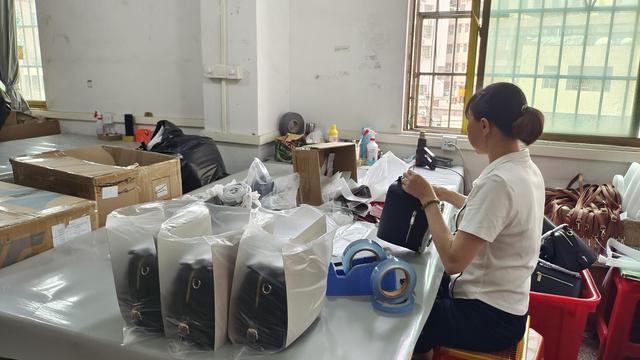
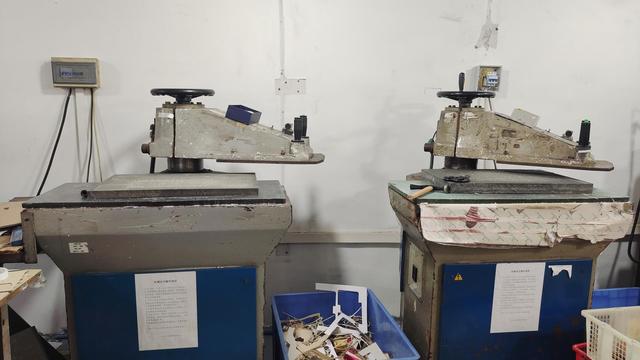
For global procurement managers at enterprise levels, sourcing leather goods is a highly technical task. Decisions are predicated on clear, quantifiable parameters across several key axes. To satisfy the information requirements of seasoned auditors, the supply system must be transparent about chemical formulations, physical durability thresholds, and machine operating constraints.
Strict enforcement of REACH, RoHS, and California Proposition 65 regulations. Buyers demand heavy-metal-free, low-VOC coatings and certified azo-dye-free linings.
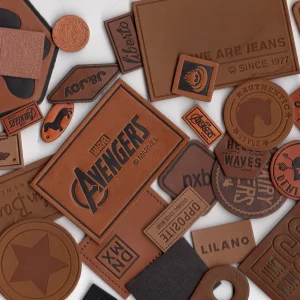
Integration of heat-press branding, high-frequency embossing, and micro-injection molding. Custom leather patches must maintain visual fidelity after heavy washing cycles.
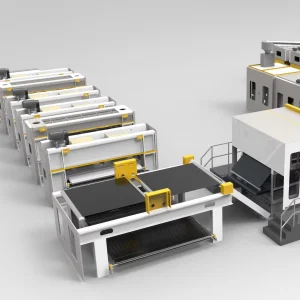
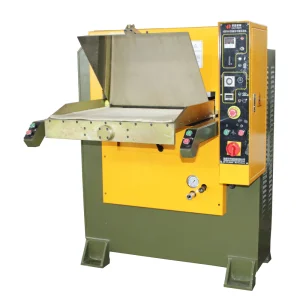
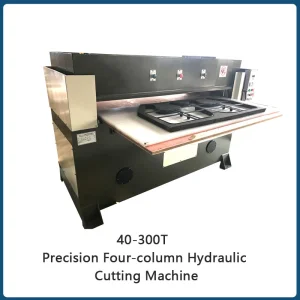
Mitigating labor costs and quality variance through automated mechanical lines. Utilizing 50-ton hydraulic die cutters and multi-station hot forming machinery.
Furthermore, structural testing forms a critical element of the sourcing workflow. Before mass production, premium suppliers subject materials to rigorous physical tests. These protocols encompass Taber abrasion resistance tests, Bally flexometer evaluations (often requiring over 100,000 flexes without cracking), and Xenon-arc light fastness testing to simulate prolonged solar exposure in automotive interiors and outdoor fashion apparel.
Achieving consistency in leather goods manufacturing requires an integrated approach that connects chemical engineering with mechanical precision. Modern facilities achieve this via specialized production modules:
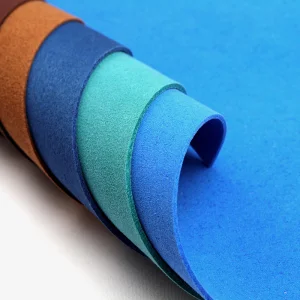
Developing high-performance synthetic substrates has solved many of the structural defects inherent in natural split leather. Microfiber suede, designed with high color-fastness, utilizes matrix-fibril spinning technologies that resemble natural hide collagen networks. This guarantees high tear strength, superior breathability, and prevents color migration onto light-colored fabrics in car interiors or high-end footwear.
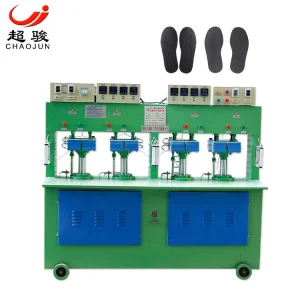
The transition to heavy machinery lines is critical for processing complex polymers, polyurethane (PU), and ethylene-vinyl acetate (EVA) foams. Multi-station hot forming machines allow manufacturers to create semi-rigid structures for protective luggage cases, functional compartments in handbags, and ergonomic insoles for shoes. Utilizing uniform heat distribution and hydraulic press plates, these machines lock three-dimensional shapes into place, ensuring structural integrity over years of wear.
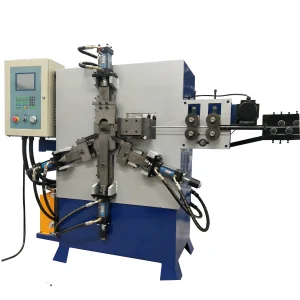
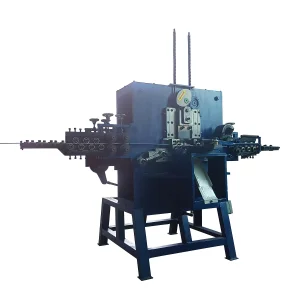
The life cycle of a premium handbag or leather garment is often limited by its weakest point: the metal hardware. Strategic manufacturers utilize high-performance mechanical wire-bending and forming machines to manufacture heavy-duty brass, zinc alloy, and steel hardware buckles directly in-house. Controlling this stage prevents rust, controls tolerance values, and avoids plating peeling under salt spray test conditions (typically 24 to 48 hours of exposure).
The leather goods industry is experiencing rapid evolution under the influence of environmental regulations and carbon neutrality initiatives. Traditional synthetic leathers relied heavily on dimethylformamide (DMF) and plasticized PVC, which release volatile organic compounds (VOCs) and toxic residues during manufacturing. Today, leading suppliers are pivoting toward clean, green material alternatives:
For procurement officers, sourcing these materials provides an immediate advantage in SEO visibility and consumer brand perception. Highlighting "carbon-neutral" and "circular material sourcing" aligns directly with Google's E-E-A-T guidelines, offering valuable information gain to the end customer.
To successfully ship manufactured goods worldwide, a supplier must establish strong international logistics channels and secure necessary regulatory certifications. Dongguan Fren Fashion Co., Ltd. coordinates direct shipments to key markets including North America, Europe, Asia, the Middle East, and South America, maintaining specialized compliance teams to navigate regional trade requirements.
Providing correct Harmonized System (HS) codes (e.g., Chapter 42 for leather goods, Chapter 84 for machinery) to ensure clear customs handling and avoid delivery delays.
Active preparation and compliance documentation for Sedex (SMETA), BSCI, and ISO 9001 inspections, meeting the risk-mitigation demands of large global retailers.
Real-time video inspections, digital defect logging, and third-party inspections (SGS/TUV) verify that production runs match gold-standard samples.
As the leather goods manufacturing landscape becomes increasingly automated, competitive advantages will stem from integrating smart hardware systems. The timeline below illustrates the expected development path for modern factories over the next five years:
This FAQ section addresses common queries from B2B sourcing managers regarding materials, machinery, order minimums, and certification protocols.
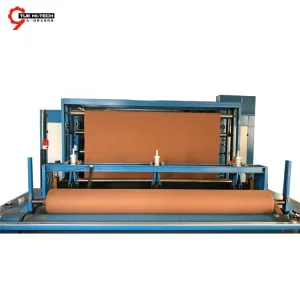
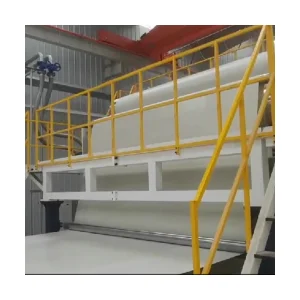
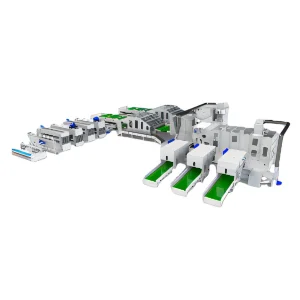
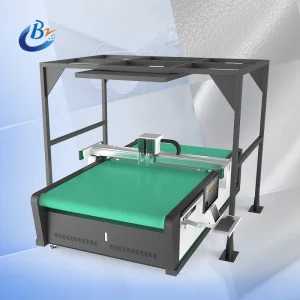
Explore our industrial-grade manufacturing lines, synthetic extrusion lines, and precision cutting systems.
 Fren Fashion