In 2026, shoppers need more than a glossy surface or a luxury label. They need evidence that a handbag can survive daily friction, weather, weight, and repeated opening. This guide explains how to identify durable handbag materials through practical inspection, reliable specifications, and real-world use.
Fashion and sustainability authority Vivienne Westwood once advised, “Buy less, choose well, make it last.” That principle remains useful when comparing full-grain leather, coated canvas, recycled nylon, and modern microfiber. Check the material’s density, grain, coating, edge finishing, and resistance to scratching. Press the leather gently. It should flex without cracking or feeling unnaturally plastic-like. Rub a hidden corner with a clean cloth. Loose dye can signal poor finishing.
Look closely at the construction.
Strong material cannot rescue weak craftsmanship. Examine reinforced handles, even stitching, secure rivets, smooth zippers, and a firmly attached lining. Recycled fibers may perform impressively, but recycled content alone does not prove durability. Certifications and laboratory abrasion results offer stronger evidence than vague “premium” claims.
Be realistic, too. No handbag stays perfect forever. Light-colored leather marks easily, while heavily coated materials may resist stains but develop visible creases. Personal use matters. A commuter carrying a laptop needs different performance from someone using a bag occasionally. By learning how to identify durable handbag materials, buyers can compare honest strengths, notice marketing gaps, and choose a bag built for their actual routine. Some judgments remain subjective. That is worth admitting.
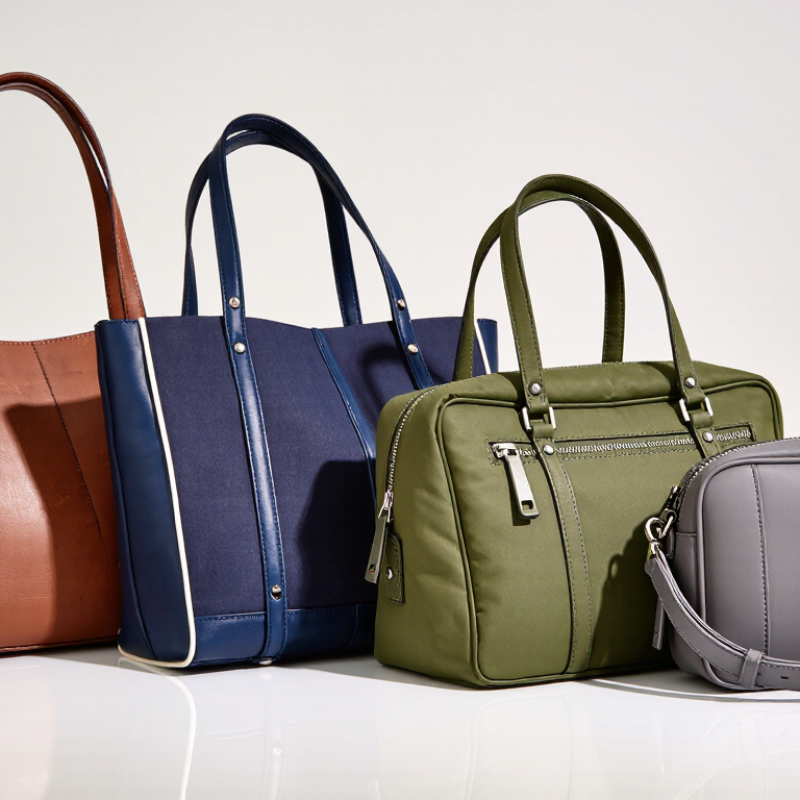
Durability starts with accurate material identification, not a glossy product description. ISO 2076 provides generic names and definitions for textile fibers, including polyester, polyamide, acrylic, and regenerated cellulose. It does not rank fibers by durability. A higher percentage of polyamide may suggest strong abrasion resistance, but construction still matters.
Check the fiber composition label and request technical test data when available. A 100% polyester lining can resist daily rubbing, yet loose stitching may fail first. Dense weaving, reinforced corners, and smooth seam edges often reveal more than the fiber name. Feel the fabric. Look for balanced tension and consistent surface texture.
Leather requires a separate assessment because ISO 2076 does not classify animal hide. Examine grain consistency, edge finishing, thickness, and coating flexibility. A heavily coated surface may resist stains but crack after repeated bending. Synthetic leather can contain polyurethane layers over textile backings, so ask for both components and their percentages. Care labels help, but they are not laboratory evidence.
Abrasion, tear, flex, and colorfastness reports provide stronger support. Verify the test method, sample condition, and reported result. Standards can guide judgment, not replace it. I would avoid calling any material “indestructible.” Even a strong fiber fails when cut, overloaded, or poorly sewn. Some evaluations remain uncertain when suppliers provide incomplete data. That uncertainty should stay visible.
A durable handbag material should be judged by measured tensile strength, not by a glossy surface or heavy feel. ISO 13934-1 tests fabric strips by pulling them until rupture. The result is recorded in newtons, showing the maximum force the material withstands. Ask for warp and weft results separately. Direction matters.
A practical inspection starts with the test report. Check the specimen width, conditioning method, seam treatment, and number of samples. A material rated at 900 N may still fail near a stitched handle if the seam concentrates stress.
ISO 13934-1 measures fabric strength, not the complete handbag. That distinction is often missed. It should not be.
Textile Exchange’s Materials Market Report 2024 states that global fiber production reached about 124 million tonnes in 2023, while polyester represented roughly 57% of output. High production volume does not prove high durability. Compare the actual report values instead.
For example, record whether a coated textile reaches 700 N in both directions, or drops sharply after abrasion and conditioning. A 2024 laboratory report should also reveal test variability, because one unusually high result can mislead buyers.
I would request at least five specimens per direction and inspect the lowest result, not only the average. That approach is less impressive on paper, but more honest in use.
How to Identify Durable Handbag Materials in 2026?
When choosing a durable handbag, inspect abrasion data instead of trusting appearance alone. ASTM D3884 measures surface wear through controlled rotary rubbing. A machine presses abrasive wheels against a prepared material sample. The reported cycle count indicates how long the surface withstands repeated contact.
Higher counts often suggest better resistance, but no universal pass score exists. Results depend on wheel type, pressure, backing, and endpoint definition. A coating may look strong yet crack after flexing. A beautiful finish can fail early. Compare reports using identical test conditions, and request the laboratory’s full method details. Independent testing adds credibility, especially when the report identifies sample thickness, conditioning, and test load.
Look closely at areas that suffer daily friction. Corners may scrape desks, while handles rub against skin and clothing. Check the material around zipper edges and bottom panels too. ASTM D3884 cannot fully reproduce dirt, moisture, bending, or sharp objects in real use. This is where judgment matters. A high cycle count supports a durability decision, but it should not make the decision alone. I would also bend a sample repeatedly and inspect for whitening, peeling, loose fibers, or color transfer. These simple observations can expose weaknesses that a single laboratory number misses.
How to Identify Durable Handbag Materials in 2026?
A durable handbag begins with measurable leather structure, not a glossy surface. ISO 5398 determines chromium oxide content through chemical analysis. The result is reported as Cr2O3, commonly linked with chrome-tanned leather. Many production specifications use roughly 2.5% to 4.5% Cr2O3 as a practical reference range. However, this number is not a durability score. It confirms tanning chemistry, not fiber strength, finish adhesion, or tear resistance.
Ask for an ISO 5398 test report from the supplier. Check the method used, sample location, moisture condition, and laboratory date. A shoulder sample may behave differently from a belly sample. That detail matters. Leather Naturally’s technical guidance also emphasizes consistent fiber structure, controlled moisture, and testing beyond appearance. The Leather Working Group’s audit framework similarly treats traceability and process controls as important quality indicators.
Use chromium-oxide data beside tear, tensile, flex, and abrasion results. ISO 3377-2 can assess tear strength, while ISO 5402 evaluates flex resistance. A dense full-grain panel may still fail at a thin folded edge. I have seen attractive leather crack where the handle bends repeatedly. That is the uncomfortable part. Test results can describe one cut piece, not every panel in a finished bag.
Look for balanced evidence: stable Cr2O3 content, strong tear resistance, clean edge construction, and repeated flex performance. Claims without laboratory conditions deserve caution.
ISO 5398 determines total chromium in leather and reports the result as chromium oxide (Cr₂O₃). Chrome-tanned leather generally contains more chromium oxide than vegetable-tanned or chrome-free materials, providing a useful indicator of tanning structure when reviewing laboratory reports.
The chart shows representative practical ranges by material type, expressed as mass percentage of Cr₂O₃. These are reference ranges rather than ISO pass/fail limits. Chromium-oxide content alone does not prove durability; fiber density, grain structure, finishing, thickness, tear strength, and flex resistance should also be evaluated.
Durable handbags begin with verifiable material behavior, not surface appearance. Textile Exchange’s 2024 Materials Market Report estimated global fiber production at 124 million tonnes in 2023. That scale increases pressure to choose materials that survive longer use. Durability claims need laboratory evidence.
ISO 5402 measures leather flex resistance through repeated bending. The test can reveal cracking, finish separation, or coating failure around handles and folded corners. Ask for the test method, cycle count, specimen conditioning, and failure description. A sample may look flawless after ten bends. It may still fail after thousands.
Colorfastness requires several ISO 105 methods. ISO 105-X12 evaluates dry and wet rubbing, while ISO 105-E04 examines perspiration effects. ISO 105-B02 assesses light exposure. Results commonly use grey-scale ratings from 1 to 5, or blue-wool ratings from 1 to 8. Higher numbers generally indicate better resistance, but the target depends on use conditions. Test the edges.
A reliable inspection should examine dark handles, pale clothing contact, and damp storage scenarios. Request full laboratory reports rather than isolated pass statements. Numbers need context. I would also compare unused and flexed specimens, because color transfer can appear only after surface fatigue.
No single ISO result proves lifetime performance; stitching, substrate strength, humidity, and careless handling still matter. Industry data can guide decisions, but it cannot replace direct testing of the finished handbag.
It identifies textile fibers such as polyester, polyamide, acrylic, and regenerated cellulose. It does not rank durability.
No. It may suggest better abrasion resistance, but stitching, weaving density, corners, and seams also matter. Material names cannot tell the whole story.
Check grain consistency, thickness, edge finishing, and coating flexibility. Bend folded corners gently and watch for cracking or finish separation.
Ask for the polyurethane coating and textile backing percentages. A smooth surface may resist stains but still crack after repeated bending.
It measures surface wear during controlled rotary rubbing. Higher cycle counts often help, but test conditions must match.
No. The test may not reproduce moisture, dirt, bending, or sharp objects. I would still inspect corners, handles, zippers, and bottom panels.
It measures resistance to repeated flexing. Request the cycle count, conditioning details, test method, and failure description.
ISO 105-X12 covers dry and wet rubbing. ISO 105-E04 examines perspiration, while ISO 105-B02 assesses light exposure.
It should identify the material, thickness, conditioning, test load, method, cycles, and failure point. A single “passed” statement feels incomplete.
Rub a handle against pale fabric, bend it repeatedly, and inspect for whitening, peeling, loose fibers, or color transfer. No test is perfect.
Learning how to identify durable handbag materials begins with examining measurable performance rather than relying on appearance alone. Fiber-based materials can be classified through ISO 2076 data, helping distinguish leather alternatives, woven textiles, and synthetic constructions. Their tensile strength should then be compared using ISO 13934-1 test results, which indicate how well a material withstands pulling forces before stretching or breaking. Abrasion resistance is another essential factor: ASTM D3884 cycle counts provide a practical basis for judging how a surface may perform under repeated rubbing and everyday handling.
For leather, ISO 5398 chromium-oxide data can help assess tanning structure and material consistency. Durability also depends on resistance to moisture-related damage and color transfer. ISO 5402 testing supports evaluation of leather flexing and hydrolysis-related performance, while ISO 105 colorfastness tests help determine whether color remains stable under rubbing, light, or washing conditions. By combining these standardized results, buyers and manufacturers can make a more objective assessment of long-term handbag quality.

Fren Fashion